The surgeon
Patrick Knipper, MD
Plastic surgeon trained in France’s leading university hospitals. He has practised this specialty for more than twenty-five years, in hospital and in private practice. He is passionate about what he does.
French Medical Council
French doctor registered with the Paris Medical Council (Ordre des médecins).
Health insurance
Surgeon contracted with the French national health insurance, sector II, with unregulated fees.
Practice in Paris
Medical activity shared between the Paris public hospitals (Assistance Publique – Hôpitaux de Paris, AP-HP) and his private practice in the 7th arrondissement.
Training
Training and qualifications
Training & qualifications
- Medical studies at the Pierre et Marie Curie Faculty of Medicine, Paris VI
- Former resident (Interne des hôpitaux) in plastic surgery in French hospitals
- Former Chief Resident (Chef de Clinique – Assistant, ACCA) in plastic surgery, Paris hospitals
- French board certification in plastic, reconstructive and cosmetic surgery (DESC)
- European board certification in plastic surgery (European Board of Plastic Surgery)
- Diploma of the French College of Plastic Surgery
- University diploma in maxillofacial and plastic surgery of the face
- Board-certified hand surgeon · microsurgery specialist
- Training in plastic surgery, UCLA · Los Angeles
- Training at the Ivo Pitanguy Clinic · Rio de Janeiro
Hospital & learned societies
- Attending hospital practitioner at the Georges Pompidou European Hospital (Paris XV)
- Member of the SOS Mains (hand emergency) unit at the Georges Pompidou European Hospital
- Member of the French Society of Plastic, Reconstructive and Aesthetic Surgery (SOFCPRE)
- Member of the International Society of Aesthetic Plastic Surgery (ISAPS)
- Member of the French College of Plastic Surgery
- Member of the editorial board of the Annales Françaises de Chirurgie Plastique
Teaching & commitment
- President of Interplast-France / Humanitarian Plastic Surgery, an international NGO providing plastic surgery in developing countries, since 2003
- Scientific director and teacher of the university diploma in reconstructive surgery in challenging conditions, Paris VI, for 10 years
- Plastic surgery teacher at Pierre and Marie Curie University, Paris VI
- Lecturer at SciencesPo / Paris School of International Affairs, “Living cultural heritage and its creative dimension”, for three years, under the direction of the ethnologist Dominique Sewane
- Lecturer at the microsurgery CEC of the Faculty of Medicine of Sfax (Tunisia) for 5 years
- Lecturer in the inter-university diploma in surgery and exceptional health situations, Sorbonne University · Prof. S. Gaujoux
Approach
Plastic surgery can add life to these years
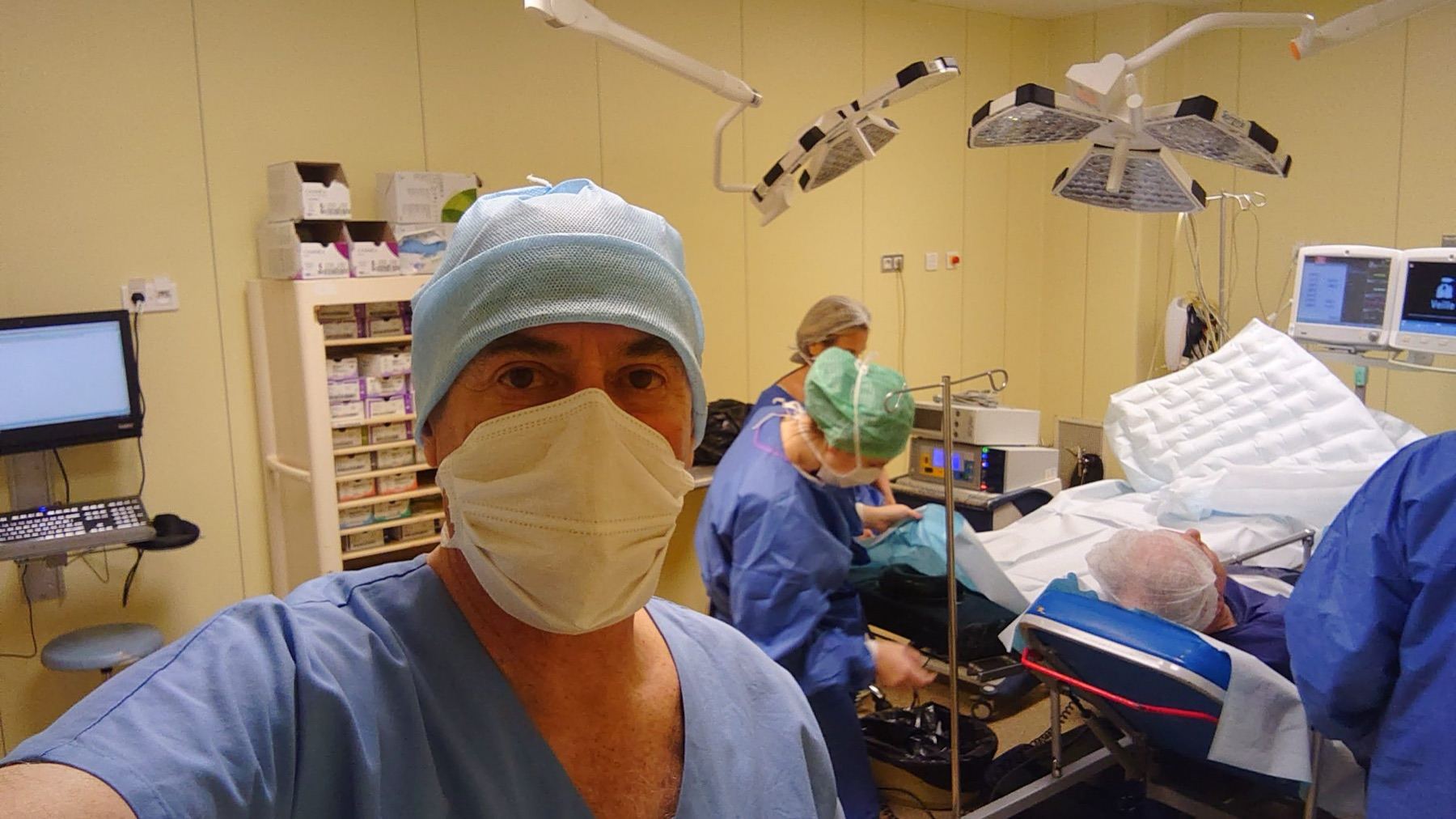
Medicine can add years to our life. Plastic surgery can add life to these years.
The specialty of plastic surgery includes reconstructive surgery, plastic surgery and cosmetic surgery. However, this division should not make us forget that the term plastic surgery embraces an cosmetic purpose and a spirit of reconstruction with the same sensitivity. A true cosmetic surgeon is above all a reconstructive surgeon, just as a plastic surgeon must always keep an cosmetic dimension in his reconstruction. A reconstructed breast must be as beautiful as possible for the procedure to be a success!
Plastic surgery is also about reconstructing aesthetics… In my daily practice, I perform as many reconstructive procedures as cosmetic ones… and it is fascinating!
Reconstructive surgery
Reconstructive, or restorative, surgery repairs congenital or post-traumatic disorders of the visible organs of the body, those that alter their form or function. Plastic surgery, in its reconstructive form, can be seen as rehabilitation surgery after cancer, an accident, a congenital malformation or a destructive infection.
Plastic surgery
Plastic surgery is the “surgery of forms”. It is corrective surgery for significant deformities that do not cause major functional impairment: for example certain breast hypertrophies which, because of their size, hinder sport, clothing, in short everyday social life. The same applies to prominent ears in children, to certain deformities of the abdomen that can take the form of a large apron of skin and fat covering the pubis, or to the after-effects of extreme weight loss that can leave considerable excess skin.
Cosmetic surgery
Cosmetic surgery belongs to a very old tradition: physical appearance has always been transformed, universally, at all times and in all places. Pure cosmetic surgery represents, among all plastic surgery techniques, the most artistic and most perfectionist conception of the surgical act. It currently addresses well-defined requests for the face (face and neck lift, blepharoplasty, rhinoplasty, otoplasty), the figure (surgery of the breasts, abdomen, thighs, arms) and cosmetic medicine.
Cosmetic surgery is not a surgery of “getting younger”. It is a surgery of “ageing better”.
So-called rejuvenation surgery does not literally rejuvenate, even though it clearly improves certain signs of ageing. The aim of our procedures is not transformation; we simply propose a change that tends to harmonise shapes as discreetly as possible. One word guides our procedures: harmony!
Two more recent concepts
Humanitarian cosmetic surgery. Time is sometimes lived painfully in the body and through the body, in a state of nakedness that no veil can hide. Can we, at most, hope that a surgical veil will make this destroyed face, which the world no longer dares to look at, more transparent? […] Can humanitarian work be cosmetic? Can cosmetic surgery be humanitarian? Read the article (in French) →
Ethno-surgery. It brings together modern surgery and traditional medicine. We treat the patient with highly sophisticated techniques while taking into account the environment in which we operate, the patient’s culture and local traditions. Ethno-surgery means transforming the body in harmony with its surroundings, wherever that may be. Read the article (in French) →
Practice locations
Private practice, clinic and hospital
Consultations at the practice in the 7th arrondissement, surgery at the Clinique du Trocadéro, public consultation at the Georges Pompidou European Hospital.